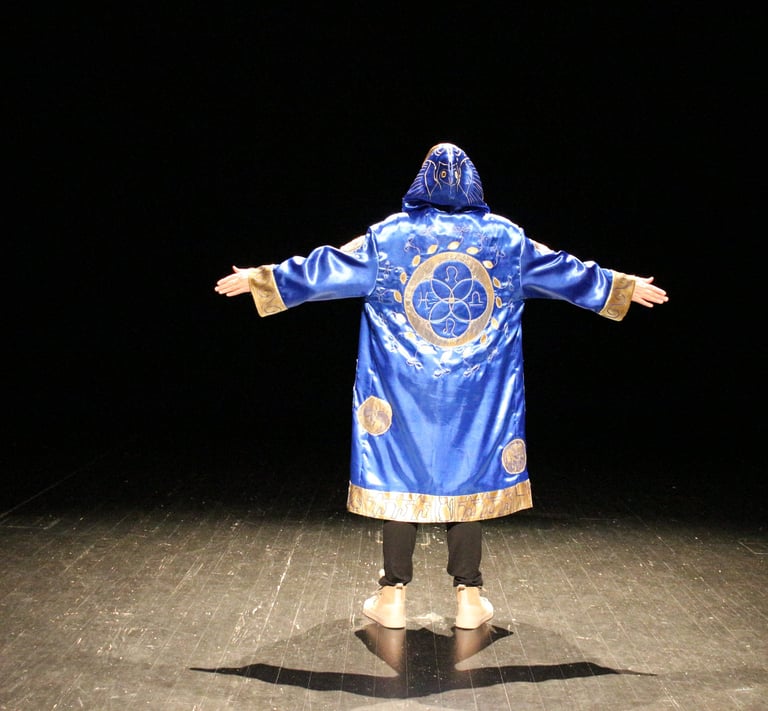
In 2024, my mother and I chose to celebrate and fortify the bond between our hearts through an artistic collaboration, so that when the time comes for us to part ways, we know that we are eternally united in this story.
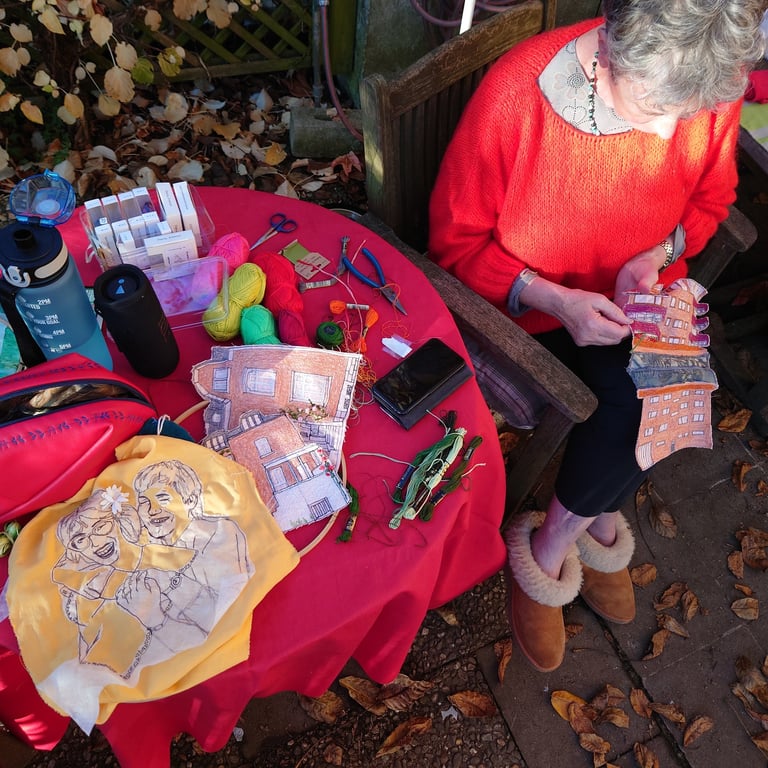
LIEWEN is an ongoing autoethnographic collaboration between my mother, Therese d’Incau-Besenius, and myself, created in response to her cancer, grief, and the inevitability of death. Through textile practices such as knitting, embroidery, tapestry, and storytelling, alongside installation, film, and performance, we transform personal memories and emotional burdens into shared acts of care and resilience.
Through what I call performances of care, the project explores love, healing, and intergenerational connection. LIEWEN positions art not only as representation, but as an embodied aesthetic experience that supports processes of coping, remembering, and continuing life through collective creation.
February 2024 - x
performance of care, autoethnographic research collaboration with my mother Thérèse Besenius
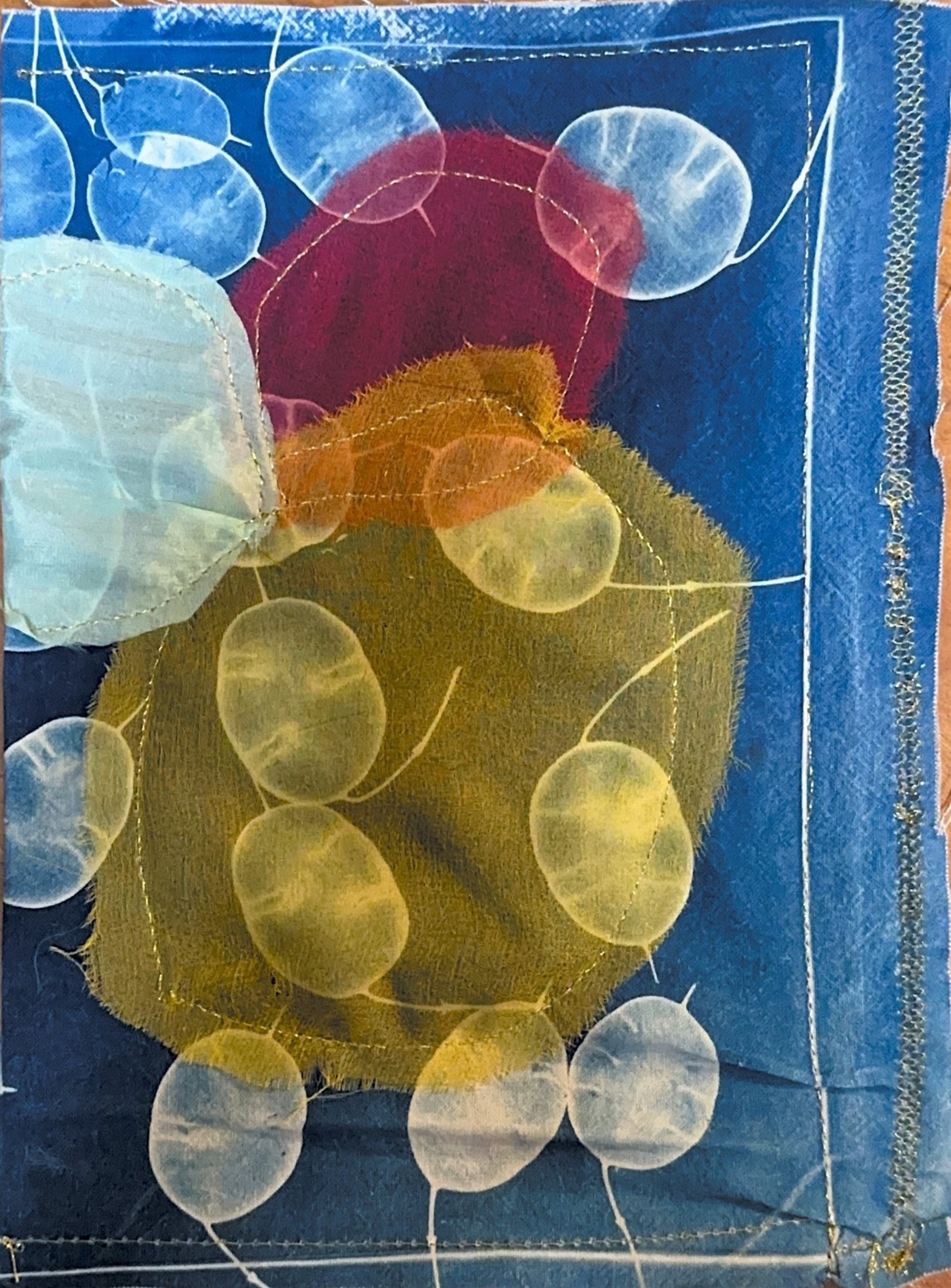
"When I was a little girl, my mother was traveling a lot to seminars and other very adult important events. My little brain was not able to understand the complexity of the concept of her absence. I just remember that I was always sure she would come back.
Before leaving, Mama would place her hand on my chest, right at the spot where my heart was. With a gentle twist of her hand, she mimicked tightening a screw hook, then pulled an invisible string up to her heart, securing its attachment there too.
Now that we are confronted with disease and the inevitability of mortality, we need to put on our armour of softness and transcend our human forms, to bear the load of reality.
In 2024, my mother and I chose to celebrate and fortify the bond between our hearts through an artistic collaboration, so that when the time comes for us to part ways, we know that we are eternally united in this story."
Aurélie
Thérèse, my mother
"Since the onset of my illness and the aggressive treatment, the relationship between my daughters and me has changed. Before, I was the protector of my children, but when I became ill, I suddenly needed strength from others. My children were the light in my life, helping me to keep going.
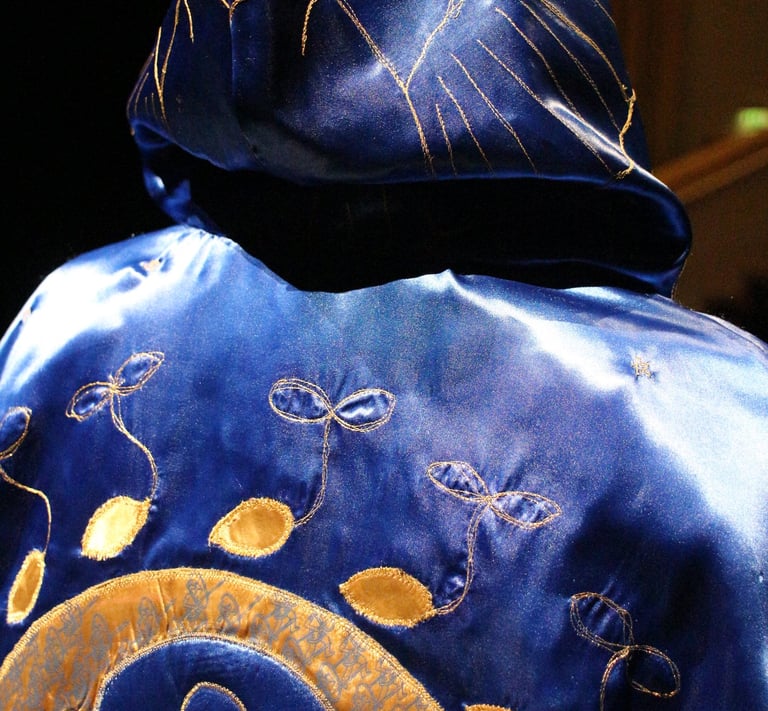
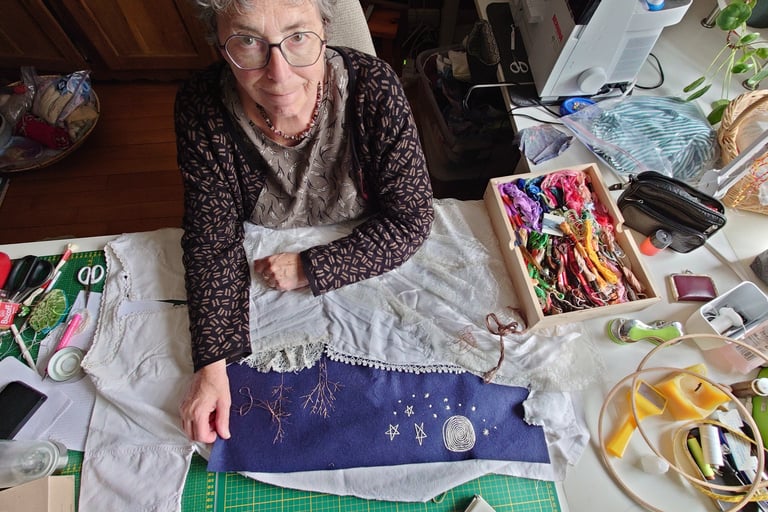
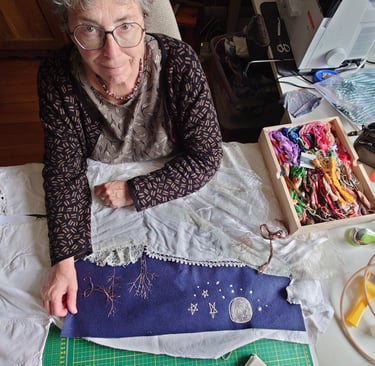
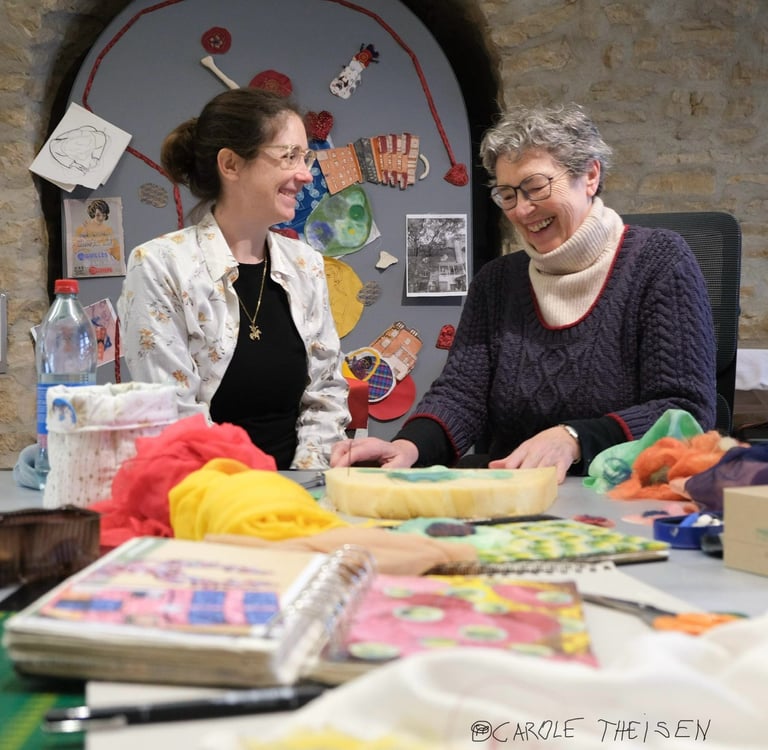
When my daughter invited me to take part in an artistic project, I immediately said yes. We began stitching memories and life experiences using archived fabric materials. It helped us transform emotional burdens into something beautiful and to develop a forward-looking attitude. We changed our perspective, and the knot of the serious illness began to loosen.
Now I always tell myself: “Keep going, never stop, otherwise you’ll sink.” Even when I don’t feel well physically, we continue slowly. This project helps me talk about my illness and, through artistic creation, to look positively toward the future. Life goes on: even when I am no longer here, the project will leave traces of my existence."
The project
LIEWEN is an ongoing autoethnographic collaboration between my mother, Thérèse d’Incau-Besenius, and myself which we started as a necessity to deal with illness and the inevitability of death.
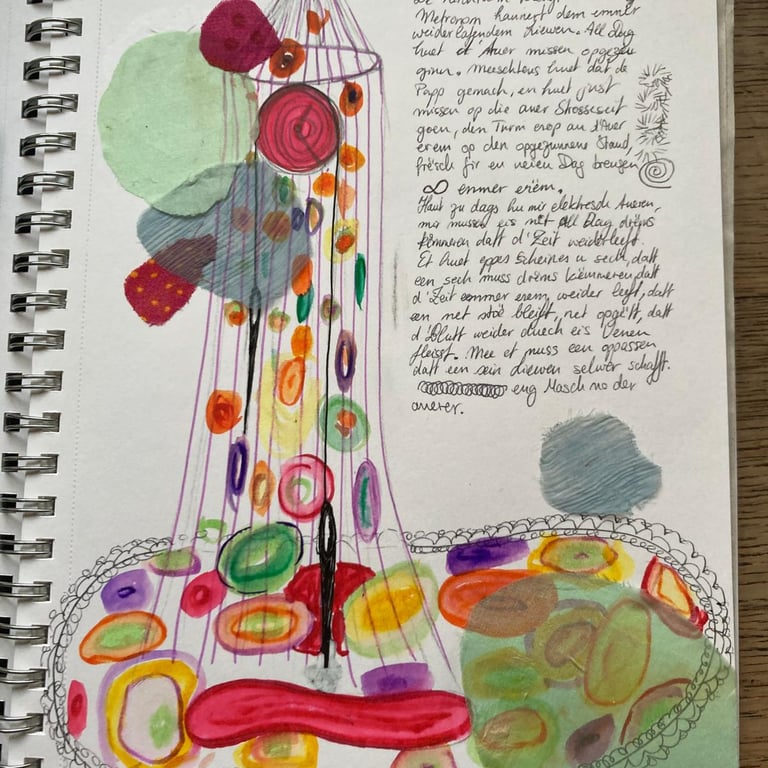
When my mother was diagnosed with incurable cancer, my creativity staggered. Everything that I had learned about play and art up to that point, I could no longer put into practice. By necessity, my mother’s illness then brought me to an artistic turning point, where I had to expand my practice and reflect on compassion, love, care, and also precisely grief as a creative and playful driving force. Through ancient methods, such as knitting, embroidery, tapestry, and the telling of stories, my mother and I created a body of work that can be defined as ‘aesthetics of care’ (after Yuriko Saito). Following Saito’s concept, creative energies are channeled to turn heavy burdens into relics that are symbols of an aesthetic process.
The interwoven elements of textile, ritual, and storytelling on the adjacent themes of memory, grief, and healing have now flourished into a multitude of works, ranging from multimedia tapestries, performance, photography, costume design, and installation. As the fabric of our stitching intertwines, the meanings of this project become more intricate. Liewen positions art not only as representation, but as an active healing practice. The process becomes a way of coping, remembering, and creating life.
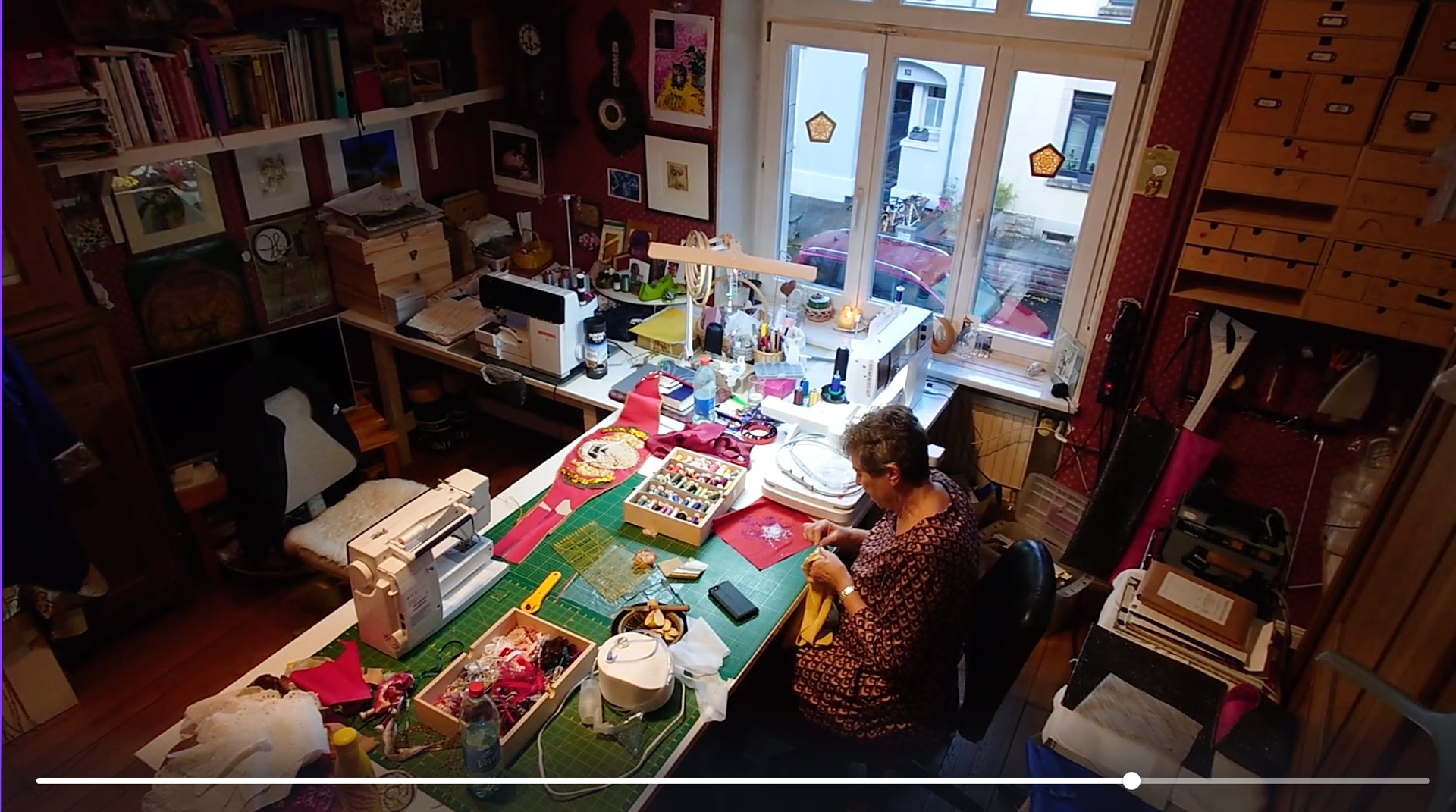
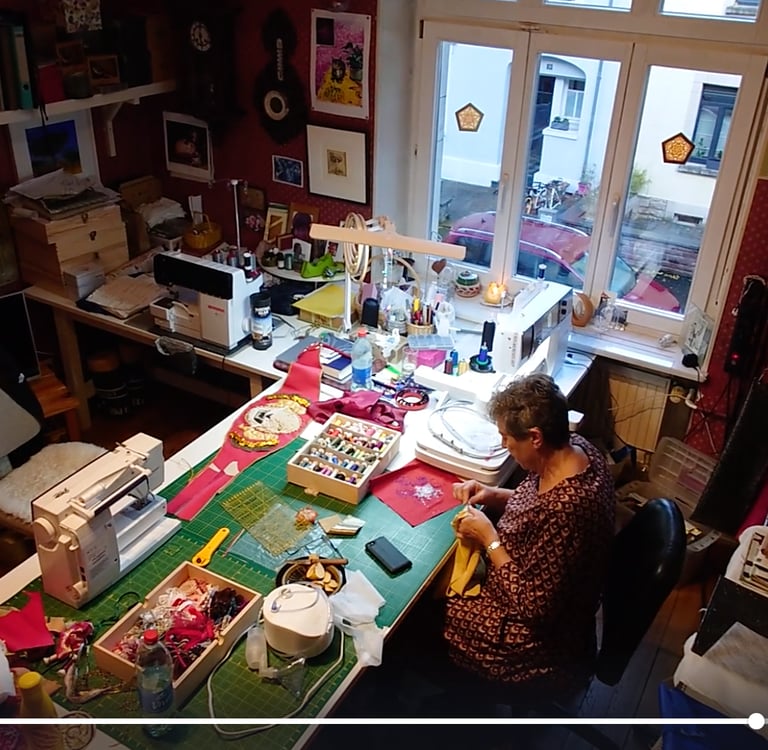
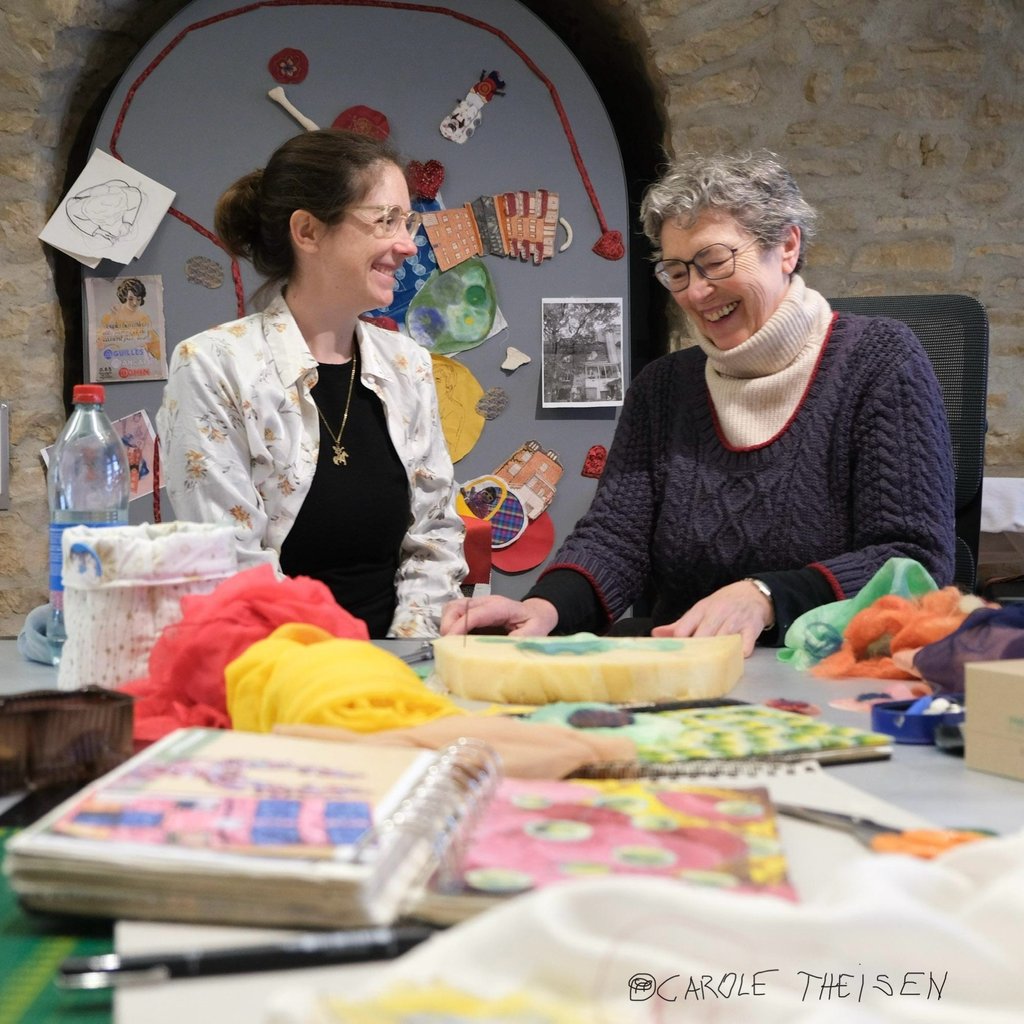
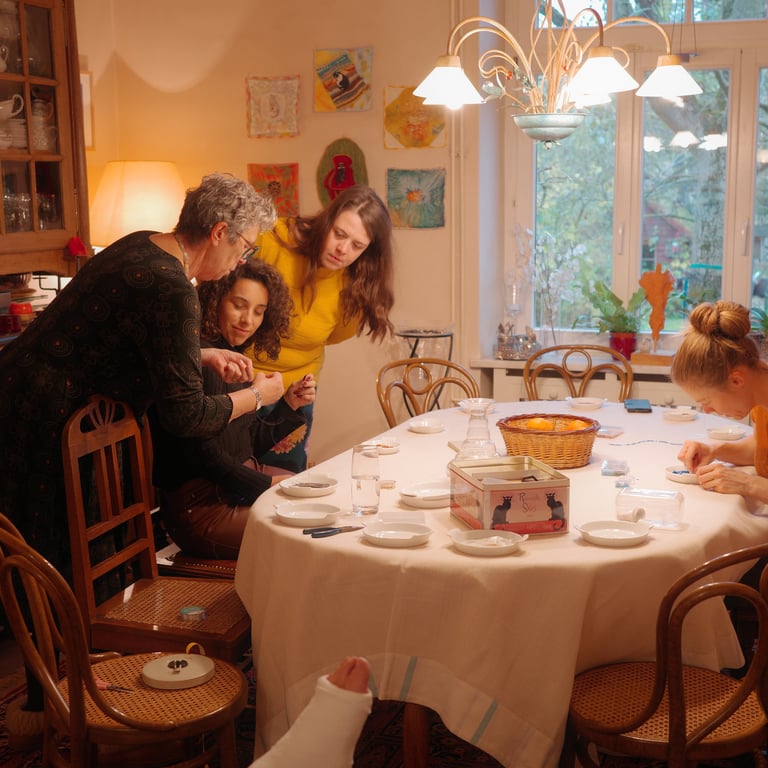
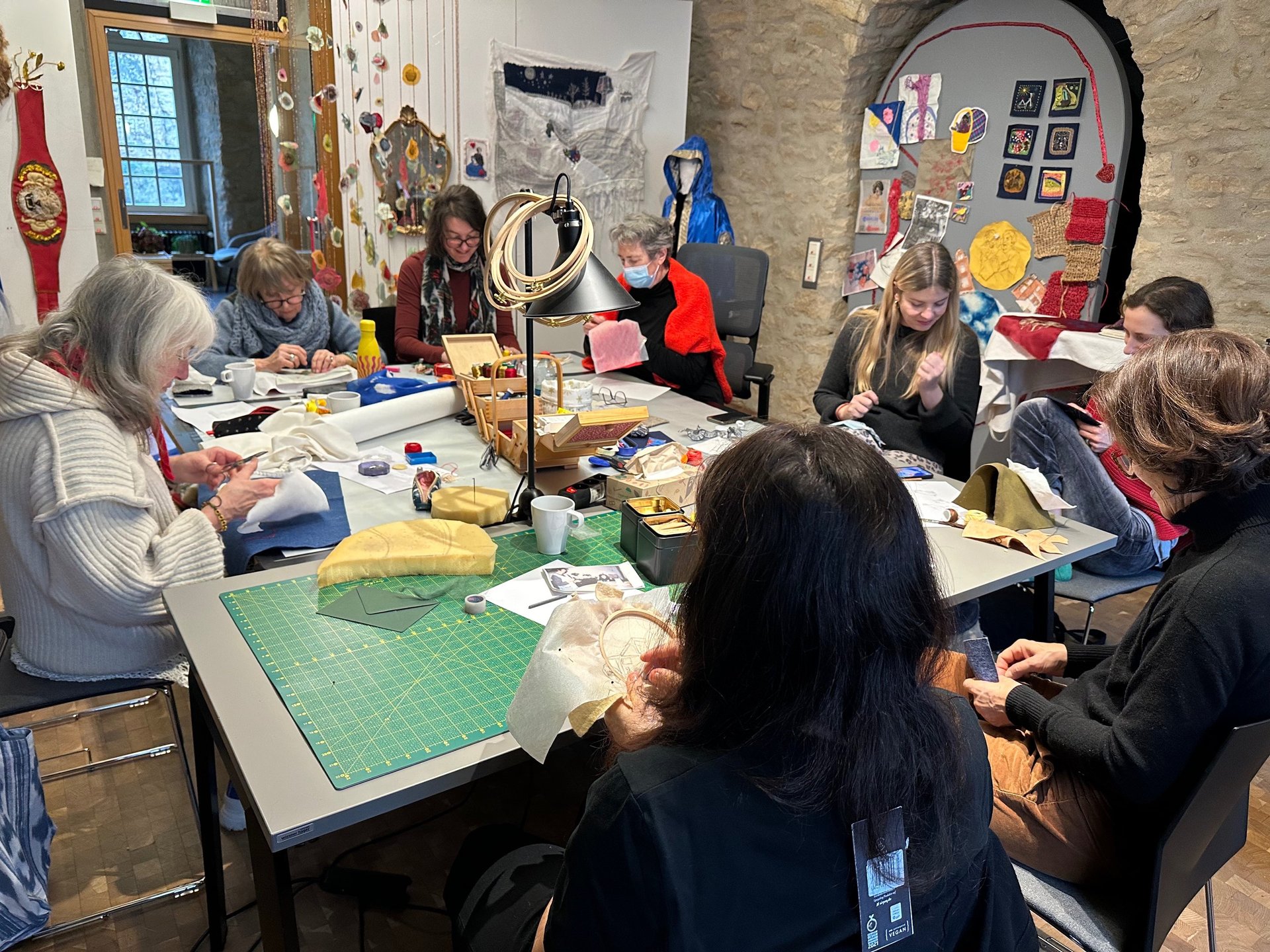
Until now, our work had taken place almost entirely within the intimate space of our home (2024-2026), where every object carries meaning and history. This private setting has allowed us to create with depth and tenderness, however as we expanded more and more, our project felt bigger than just our home. January 2026 marked an important shift in the development of the project. The residency in Neimënster allowed us to place this process within a wider artistic context and to share it more openly. We invited friends and family into the studio, discussed the project with artists and cultural practitioners, and experienced the dynamic of a residency environment together for the first time.
This context proved especially meaningful for my mother. It encouraged her to experiment more freely and to express her ideas with greater confidence. At the same time, our artistic practice expanded. While the project originally revolved mainly around tapestry, we began experimenting with installation and film. These new media opened the possibility of developing our vision for a more immersive spatial exhibition, inspired by Alice's rabbit hole. It is a voyage through our minds, our lives and our therapeutic developments, but not as a personal therapy insight but rather as an intimate voyage that many of us can relate to.
“Aesthetics of care {...) focuses on the first-person practice of cultivating the virtuous mode of relating to the other in our aesthetic experience through care.”
-Aesthetics of care in everyday life-
Yuriko Saito
2022, p.20
Timeline
ongoing
2026
May
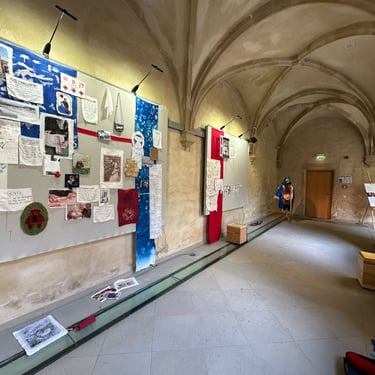
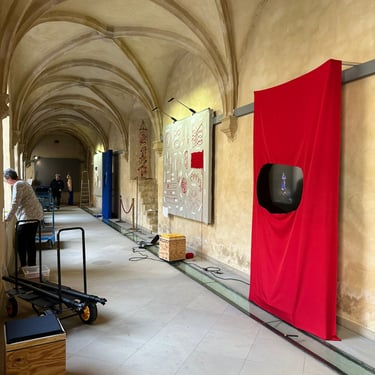
Church Exhibition - Neimunster
Our first exhibition is in a non-art space of shared historical significance: the church in Feulen, Luxembourg, where my mother grew up.
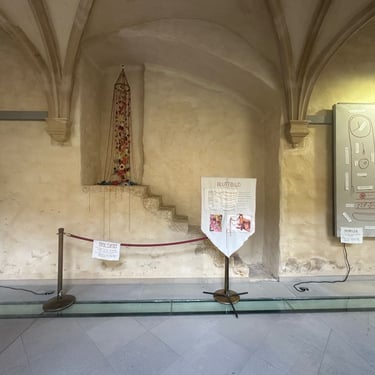
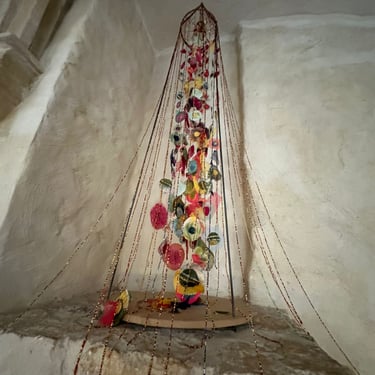
Our work revolves around two recurring symbols of the tower and the needle and thread stemming from both personal history and the language of fairy tales, suggesting isolation, connection, continuation and repair.
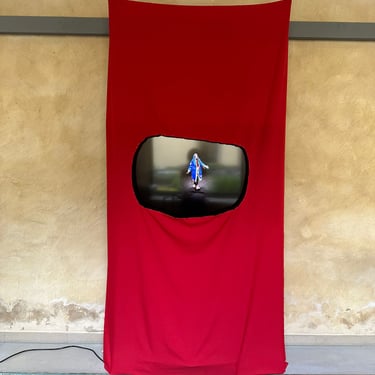
Inside the church, we envision a “temple within a temple”: an installation containing a tower at its core (see image). This inner space becomes a site for a subtle performance or ritual of care: an act of mending, repetition, or quiet devotion.
By placing one symbolic structure within another, we explore how meaning, memory, and ritual can be carried forth and transformed at the same time.
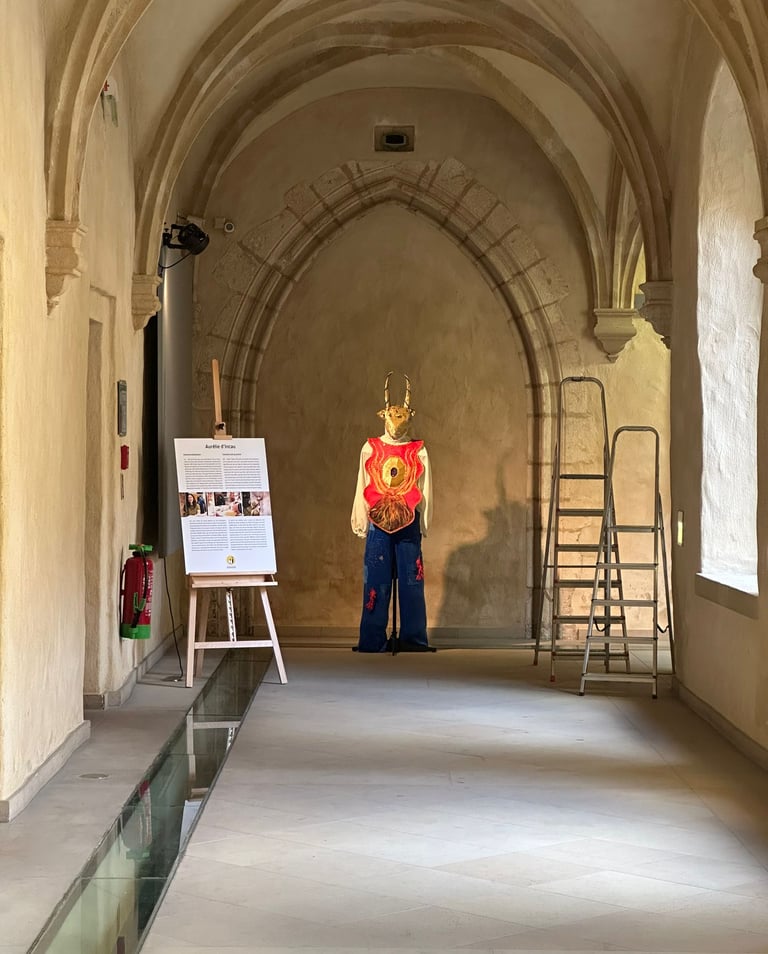
9th of May, Luxembourg
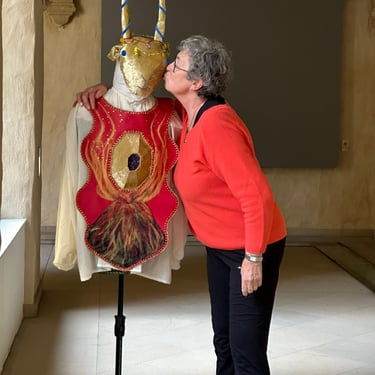
2026
April
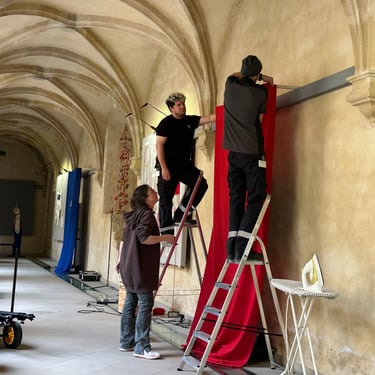
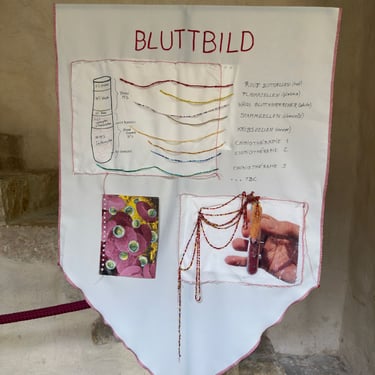
Preparation for process exhibition at Neimënster Cloitre 09.05-25.05
editing documentation video for Neimënster expo
working on research elements
Connecting to the Ministère de l’égalité des genres et de la diversité & Ministère de la culture Département du patrimoine culturel for a potential collaboration.
2026
January
Neumünster research residency: development of vision for exhibition. Studio visits. deepening our understanding of the symbolic understanding of our work.
Development of our community involvement. first contacts with fondation cancer
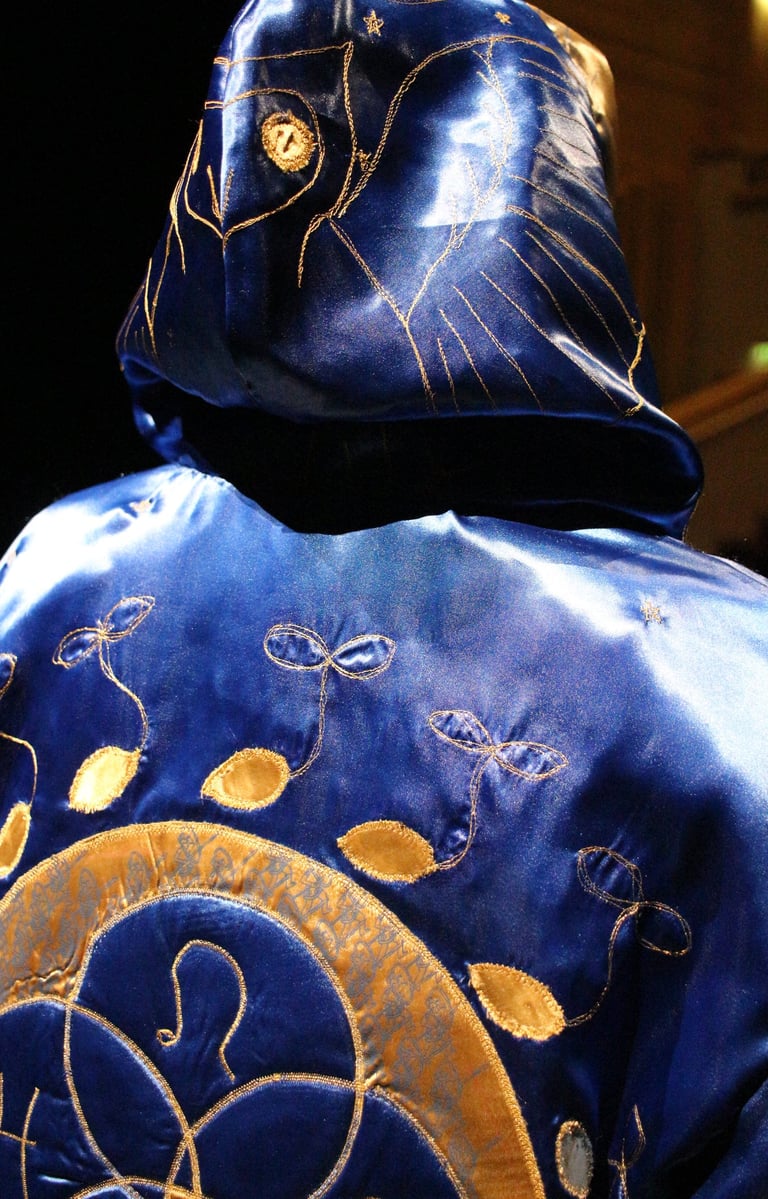
Artistic work: costumes and installations and video work sketches
2024-2025
Intimate working sessions according to my mother’s health.
Community rituals with family and friends, exploring care rituals
research started off with many conversations on childhood memories and laying out life happenings.
Archival research on material found at home and photographs from family albums.
video and audio documentation
Research on emotional economies, care aesthetics and play in adulthood.